


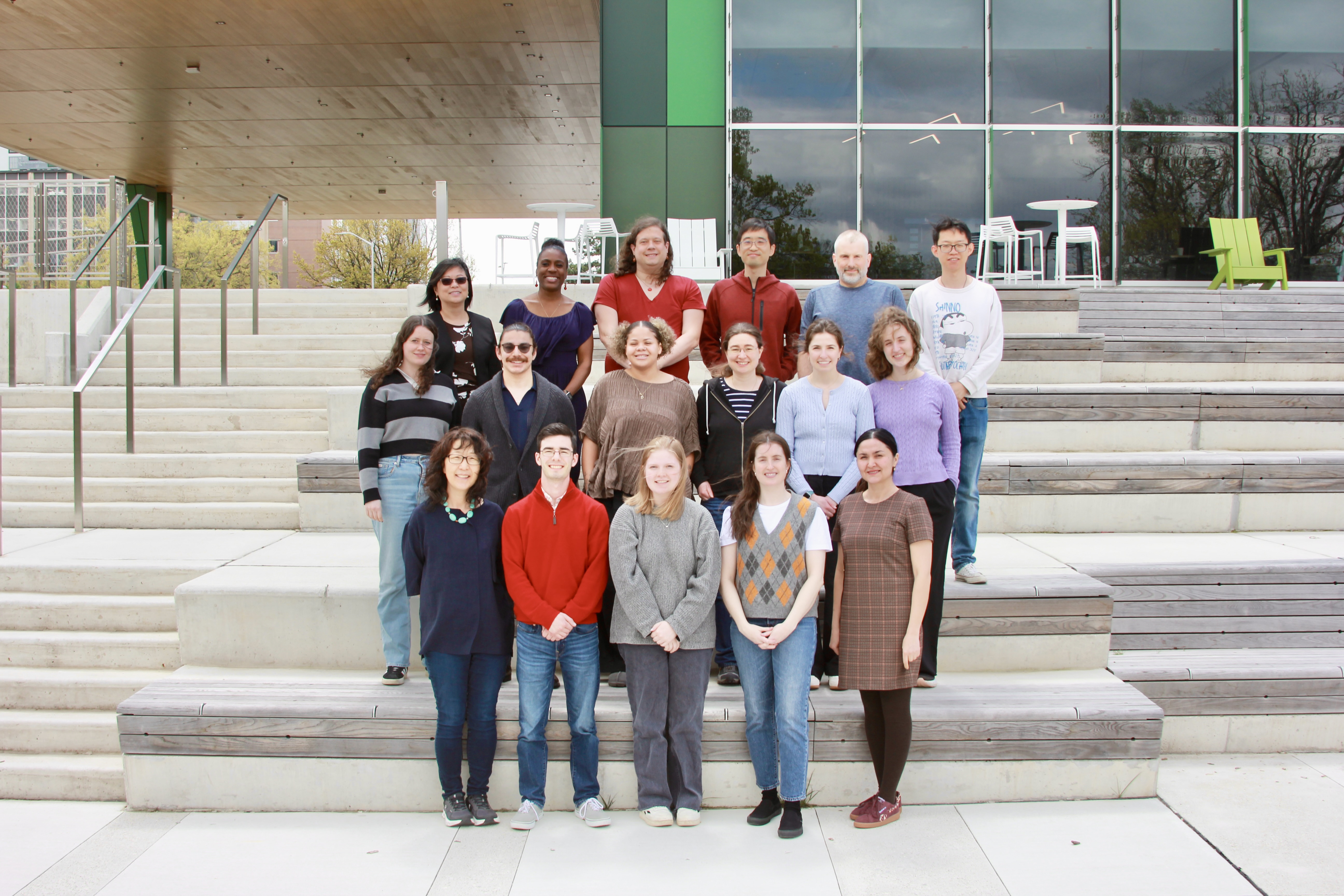
Our Team
Principal Investigator

Seung Yon (Sue) Rhee
Seung Yon (Sue) Rhee is a Michigan State University Foundation Professor in the departments of Biochemistry and Molecular Biology, Plant Biology, and Plant, Soil, and Microbes and Director of MSU’s Plant Resilience Institute. Dr. Rhee’s group strives to understand how plants adapt and acclimate to changes in temperature, water availability, or nutrient limitation. They are also interested in decoding biological traits from molecular to organism scales. In addition, they are developing translational research programs involving engineering resilience and metabolic traits in bioenergy and cover crops. Dr. Rhee has extensive leadership, mentoring, and research experience and has trained over 160 scientists, many of whom have achieved leadership positions in academia, government, and industry.
Managers & Coordinators
Flavia Bossi (Senior Research Associate and Lab Manager, MSU)

Since college, I have always been interested in the regulation of gene expression; promoters and transcription factors are still my favorite areas of study. Following that interest, I joined Patricia Leon’s lab at the Instituto de Biotecnologia (Universidad Nacional Autonoma de Mexico) to work on the functional characterization of an AP2/ERF transcription factor involved in the glucose signaling pathway in Arabidopsis thaliana. It was a challenging Ph.D. project that excited, frustated, and at times puzzled me. Early in 2010, I decided to join Sue Rhee’s lab to study a family of regulatory proteins important for another level of gene regulation – targeted degradation of proteins. I was drawn to the Rhee lab for several different reasons. 1- to try to grasp the way of thinking of bioinformatitians (learn basic bioinformatics along the way), 2- to be part of an interesting multidisciplinary group, 3- looking for something new and outside of my comfort zone. Even though science eats up most of my time, I do have other interests. My most beloved hobbie has always been dance, both taking classes and enjoying dance performances. Moving to the Bay Area introduced me to another art form which is now one of my hobbies too: taiko drumming. And last but not least, I have a family-shared pastime: to play video-games. Favorite console? Nintendo DS … by far.
Charles Hawkins (Biocurator & Plant Metabolic Network Director, MSU)

I received my Ph.D. from U. Maryland under Dr. Zhongchi Liu, where I studied the ways in which gene expression and hormones come together to shape the parts of the flower and worked on a new model of the role of auxin in fruit development. I also worked on pipelines for genomic analysis in strawberry and identified the mutation behind yellow strawberries’ color. I previously received a BA in physics and computer science from U. Maryland. After receiving my Ph.D., I worked for two years as a postdoc at the USDA-ARS Plant Germplasm Introduction and Testing Research Unit in Prosser, WA under Dr. Long-Xi Yu, working on automated pipelines for genomic selection for abiotic stress tolerance in alfalfa. I joined Rhee lab in August of 2018 as BioCurator of the Plant Metabolic Network. I develop, maintain, and curate the Plant Metabolic Network, a free online database of plant metabolism (https://plantcyc.org). I maintain the website, direct curation of new information into the database, and develop the back-end pipeline that generates the databases. I am also involved in genome-scale metabolic modeling and in developing a web database for protein sub-cellular localization data in Sorghum. Finally, I provide general IT-related technical support to the lab when needed.
Maricar Macalincag (C-SPIRIT Program Manager, MSU)

I received my M.Sci. in plant breeding and genetics from Michigan State University, where I did my research on quantitative trait loci of canning quality traits in kidney beans. After being an at-home mom to my two boys, my path back to MSU took many turns, including as a freelance writer and professional blogger (when blogging was still in its infancy). From 2015 to early 2025, I was the genomics program coordinator for hereditary cancer, the MI HEARTSafe Schools, and rare diseases at the Michigan Department of Health and Human Services. Joining C-SPIRIT has allowed me to come full circle, combining my love for the plant sciences and experience with grant coordination. Outside of work, I enjoy traveling and spending time with my family and friends. I also volunteer for a food rescue organization in the Greater Lansing area.
Johanna Murray (Center Grant Communications Coordinator, MSU)

Johanna Murray completed her undergraduate studies in Journalism and Political Science at Western Michigan University in Kalamazoo, Michigan before moving to East Lansing to complete her master’s degree in Health & Risk Communication at Michigan State University. A firm believer that good communication can solve almost any problem, Johanna loves to tackle the challenge of crafting and disseminating messages to mass audiences. As a member of the Rhee Lab, Johanna oversees the communication for The Plant Cell Atlas, The Water and Life Interface Institute, and the Plant Metabolic Network. By being the communication coordinator for these three grant projects, Johanna gets to share the incredible research done by her colleagues to engage individuals both in and out of the scientific community with the importance of plant science. In her free time, you can find her training for tri-sports (swimming, cycling, or running), reading a book, spending time with family and friends, or relaxing with her cats.
Huiqiao Pan (Lab Manager/Research Assistant, MSU)

I received my B.S. in Bioengineering from Hebei University of Science & Technology, China, my M.S. in Plant Genetics and Breeding from China Agricultural University, and my Ph.D. in Molecular & Environmental Plant Sciences from Texas A&M University. Under the mentorship of Dr. Elizabeth Pierson, my doctoral research focused on elucidating the mechanisms by which plant growth-promoting rhizobacteria interact with plants. Transitioning to Dr. Brittany Belin’s lab at Carnegie Science, I investigated how bacterial extracellular vesicles and membrane lipids influence plant immunity and symbiosis, using a model system of soybean and the nitrogen-fixing bacterium Bradyrhizobium. At Sue Rhee’s Lab, I assist with lab management and research projects on how sorghum and maize adapt to drought stress.
Karine Prado (Senior Research Associate and Lab Manager, MSU)

I received my PhD from the University of Montpellier (France) where I studied the molecular and cellular mechanisms controlling the hydraulic properties of Arabidopsis thaliana rosette in response to environmental stresses. Then I joined the University of Edinburgh (UK) as a Postdoctoral Research Associate. I studied the contribution of non-transcriptional mechanisms to biological timekeeping of the pico-alga Ostreococcus tauri and how light and thermo-sensitive phytochrome photoreceptors regulate chloroplast RNA processing and photosynthesis in Arabidopsis thaliana. At Carnegie Institution for Science (Stanford, CA), as a Senior Research Associate, I studied the mechanisms of thermoadaptation of a desert extremophile C4 plant to improve crops in response to increasing temperatures. I continue this project as a Research Specialist at Michigan State University (East Lansing, MI). I am also involved in the development of a new pipeline to assign biological meaning to unknown metabolites from metabolomics data and the study of cellular recycling pathways in Zea mays leaves.
Ashley Stender (C-SPIRIT Outreach and Promotion Coordinator, MSU)

Ashley studied molecular genetics and nutritional sciences as an undergraduate at Michigan State University. She then went on to receive an M.A. in Science Writing at Johns Hopkins University. As a science communicator, Ashley is passionate about helping scientists share their work with broader audiences through writing and graphic design. As the Outreach and Promotion Coordinator for the Center for Sustainable Plant Innovation and Resilience through International Teamwork (C-SPIRIT), Ashley oversees communications, works with the Broader Impacts team, and supports the program coordinator. Outside of work, Ashley enjoys spending time with her husband, family, and cats, playing video games, and traveling.
Bioinformatics
Bo Xue (Programmer, MSU)

I graduated in 2015 from University of Minnesota, Twin Cities with a Master’s degree in Computer Science focusing on data mining and recommender system. Discovering new information from data has always been an interesting topic to me. After working at the Chinese Academy of Science on the systematic characterization of mice miRNA expression, I developed a fondness for bioinformatics. Since joining Sue Rhee’s lab in 2015, I have been working on many interesting projects, mainly the Plant Metabolic Network. Which includes developing computational pipelines and the visualization of our databases. If I’m not working, you’ll probably find me trying to catch a movie. I love the theater going experience.
Postdoctoral Scholars
Shifa Ansari (Postdoctoral Scholar, MSU)

I completed my PhD at the Max Planck Institute for Plant Breeding Research, Germany, under the supervision of Prof. Angela Hancock, where I studied the genomics of plant adaptation to urban environments. My research combined genome-wide association studies, population genomics and environmental analyses to understand the genetic basis of adaptation in Arabidopsis thaliana and related species.
As a Postdoc at the Plant Resilience Institute, I study how environmental variation shapes plant resilience under field conditions by integrating dense environmental sensing, multi-site field trials, high-throughput phenotyping, and genomic data. In addition, I investigate the genetic architecture of complex traits through the integration of multi-omics and environmental datasets. I am particularly interested in applying computational and AI-driven approaches for large-scale analyses to better understand plant resilience.
Joanna Feehan (Postdoctoral Scholar, MSU)

My scientific career has formed from diverse experiences. I completed a Bachelor’s Degree in Nursing before a Masters Degree in Cell Biology studying retinopathies using Xenopus laevis tadpole models at the University of British Columbia. For my PhD, I joined the lab of Jonathan Jones at The Sainsbury Laboratory in Norwich, UK where I used biochemical approaches to understand signaling mechanisms in plant-pathogen defensee responses. As a postdoc here at Carnegie, I am working in the lab of Sue Rhee to understand the mechanisms of extreme heat-adaptation by Tidestromia oblongifolia using population genomics approaches.
Danielle Hoffmann (Postdoctoral Scholar, MSU)

Danielle did her undergraduate studies at NC State University in Raleigh, North Carolina, majoring in Plant Biology and Biochemistry. She went on to do her PhD in Plant Molecular Biology at Michigan State University in Dr. Yair Shachar-Hill’s group, studying lipid biochemistry in a model green microalgae. She is working on engineering improved resilience to drought in the oilseed crop pennycress as well as developing a genome-scale metabolic model for pennycress. Her work integrates plant physiology, transcriptomics, and plant biochemistry.
Bethany Holland (Postdoctoral Scholar, MSU)

I am interested in using computational methods to identify metabolic engineering strategies for improving plant growth under changing environments. I earned my master’s degree in industrial mathematical modeling from the Loughborough University, and doctorate in plant sciences (supervised by Colin Osborne, Richard Clayton & Nick Monk) from the University of Sheffield. My PhD focused on modelling plant growth by investigating source-sink dynamics using ODE modelling. Since then, I worked as a postdoc with Stephen Long at University of Illinois at Urbana-Champaign building and analyzing whole-plant genome scale metabolic models of nitrogen symbiosis to assess the carbon cost of nitrogen fixation in soybean. In the Rhee lab, I build and analyze multi-scale models of plant metabolism to identify strategies that enhance growth under abiotic stress. My current projects focus on improving drought tolerance in Sorghum bicolor and pennycress, simulating C4 and C3 photosynthetic metabolism respectively, with plans to build new metabolic models of Blepharis and Flaveria to investigate the evolution of C4 photosynthesis. Through these projects, I aim to uncover metabolic strategies that support plant resilience and productivity in diverse environmental conditions. In my free time, I love going to the gym, cooking and watching movies.
Yingtao Li (Postdoctoral Scholar, University of Tsukuba)

I earned my Bachelor’s degree in Applied Chemistry in China, which established my foundation in analytical chemistry. Building upon this expertise, I moved to Japan to pursue my graduate studies at the University of Tsukuba under the supervision of Professor Miyako Kusano. Throughout both my Master’s and Ph.D. programs, I dedicated my research to the field of plant metabolomics with a consistent focus on tomato fruits, specifically conducting systematic analyses of free and bound volatiles compounds to understand how diverse cultivars and varying growth conditions interact to shape flavor profiles. In 2026, I joined the Rhee Lab at Michigan State University, marking my first step as a researcher. I view this as an exciting new chapter and a fresh opportunity for scientific exploration.
Henry Nvenankeng (Postdoctoral Scholar, MSU)

Hi! I am Henry. I recently obtained my PhD from the University of Southampton, UK. My PhD research involved investigating a key nicotinic acetylcholine receptor in nematodes as a novel pharmacological target for parasitic nematode control. This work was in collaboration with Syngenta, UK, where I had the opportunity to do 5 months of industry placement at the Jealott’s Hill International Research Centre.
I joined the Rhee lab in August 2026 in collaboration with C-SPIRIT and WALII to investigate; how plant parasitic nematodes respond to plant-derived chemicals, with the goal of discovering natural compounds that protect crops from nematode parasitism, and a second part of my work will be to understand the molecular mechanisms of desiccation in the model nematode Caenorhabditis elegans. Exciting stuff!
Out of the lab, I enjoy hitting the gym, cycling, and vibing to good music.
Barno Rezaeva (Postdoctoral Scholar, MSU)

I received my Ph.D. from the Leibniz Institute of Plant Genetics and Crop Plant Research (IPK) in Germany. My doctoral research focused on the development of advanced biotechnological methods, including doubled haploid technology, plant regeneration, Agrobacterium-mediated transformation, and genome editing. My research interests lie in plant molecular biology, biotechnology, and genetic engineering with an emphasis on understanding cellular mechanisms and improving crop traits.
At the Rhee Lab, I am establishing a protoplast system in maize to investigate whether autophagy-related transcription factors influence the expression of their target genes. I am also developing an Agrobacterium-mediated transformation protocol for pennycress to introduce a candidate gene aimed at enhancing germination capacity under drought conditions. In parallel, I am studying the timing of germination commitment in pennycress, hypothesized to occur between testa rupture and radicle protrusion.
Outside the lab, I enjoy hiking, cooking, reading novels, and watching historical films.
Katherine Rivera-Zuluaga (Postdoctoral Scholar, MSU)

I’m a Molecular Plant Pathologist and Gene Discovery Scientist with expertise in plant disease resistance mechanisms, genomics and metabolic engineering. I graduated from Purdue University in 2023. My PhD research at the Iyer-Pascuzzi Lab contributed to impactful studies characterizing the root-mediated resistance mechanisms in the diageotropica tomato mutant against Ralstonia solanacearum, revealing that the resistance response involves SA-dependent and independent pathways, xylem barriers and enhanced water stress tolerance. I worked at Corteva Agrisciences as a Gene Discovery Research Scientist, contributing to the Corn Disease Resistance and Seed Composition programs. I joined the Rhee Lab and C-SPIRIT in the summer of 2025. My project focuses on high-throughput metabolite discovery to enhance plant resilience against fungal pathogens and abiotic stresses such as heat and drought. Outside the lab, I enjoy food (I consider myself a foodie and I’m searching for the best taco place in the US), live music, dancing, and spending time with my dog, Lana Queen!
Evan Saldivar (Postdoctoral Scholar, MSU)

I graduated from UC San Diego in 2019 with a major in Molecular Biology and a minor in Mathematics. My previous research focused on small-molecule specialized metabolism in maize (Zea mays) roots, with a specific focus on terpenoid biochemistry. I am broadly interested in plant biochemistry, as well as the application and development of new techniques, both experimental and computational. I am starting a PhD in Stanford’s Biology Department in Fall 2020, and am excited to engage with the broader scientific community, at both Stanford and the Carnegie Institute!
Graduate Students
Ryan Brener (Ph.D. Student, MSU)

I am a Ph.D. student in the department of Biochemistry and Molecular Biology at Michigan State University. I joined the Rhee Lab in December 2025 after graduating from California State University Channel Islands with a bachelor’s in biology. Broadly, my research interests are centered on desiccation related stress responses across various model organisms. Before coming to MSU, I worked in the Hugo Tapia Lab, where I investigated desiccation tolerance in baker’s yeast (Saccharomyces cerevisiae). Outside of the lab, I enjoy staying active at the gym. When I’m at home, I’m usually hanging out with my cat, Habibi.
Erin Cushing (Ph.D. Student, MSU)

Erin Cushing is a Ph.D. student in the Rhee Lab at Michigan State University, in the Department of Plant Biology and Association of Molecular Plant Sciences. A former collegiate volleyball player, Erin earned her B.S. in Environmental Biology with a minor in Economics from Rockhurst University in Kansas City in 2022. She joined the Rhee Lab in March 2025 and is currently investigating how Arabidopsis seeds acquire desiccation tolerance during development, a trait that enables survival and dormancy in the dry state. Before starting graduate school, Erin worked as a research technician in St. Louis, Missouri, at the chloroplast engineering startup Plastomics, and later in the lab of Dr. Becky Bart at the Donald Danforth Plant Science Center. She is passionate about translating plant science research to improve both environmental sustainability and everyday life, and to communicating plant science to non-scientists. Outside of the lab, Erin enjoys playing pickleball, volleyball, basketball , or really any sport involving a ball. A lifelong Swiftie, she’s always happy to discuss Taylor Swift, her music, or the Chiefs. A lover of life, chaos, and good urban planning, Erin spends her free time visiting friends in big cities, planning new adventures, and enjoying social events around the Lansing area. Whether you’re curious about science or Taylor Swift, don’t hesitate to reach out!
Contact Erin at cushing7@msu.edu.
Aidan Deneen (Ph.D. Student, MSU)

I’m a Ph.D. student majoring in Biochemistry and Molecular Biology & Molecular Plant Science here at MSU. Before that, I studied Biology at American University, with minors in Chemistry and Health Promotion. I joined the Rhee Lab in the fall of 2025, and my research focuses on seed germination and desiccation. I’m interested in how seeds regulate their growth and what triggers commitment to each pathway. I aim to increase crop efficiency through improving seed characteristics. Outside of research, I enjoy playing soccer, crocheting, and anything Star Wars.
Chloe Grabb (Ph.D. Student, MSU)

I received my B.S. in Horticulture from Michigan State University in 2022. During my undergraduate career, I led an undergraduate research project that investigated new dormancy breaking techniques for Ambrosia artemisiifolia seeds. I also worked with Dr. Courtney Hollender and Dr. Charity Goeckeritz researching flower development in early- and late-flowering tart cherry species. I am currently in the Plant Biology PhD program at MSU studying all things seeds. My research mainly focuses on the relationships between seed longevity, desiccation tolerance, and rehydration/dehydration. In my free time, I volunteer at the local cat café, assisting in keeping the cats safe, healthy, and ready for adoption. I also love going on hikes and exploring nature.
Briana Hashim (Ph.D. Student, MSU)

My name is Briana Hashim, and I’m a first-year Ph.D. student in the Department of Biochemistry and Molecular Biology at Michigan State University, where I’m co-advised by Drs. Sue Rhee and Linda Hanson. I joined the Rhee Lab in the fall of 2024 and am currently studying pennycress’ susceptibility to fungal pathogens and how infections may impact subsequent crop rotations involving soybean and corn. I am a recipient of the University Distinguished Fellowship and the Plant Biotechnology for Health and Sustainability Fellowship.
I graduated from Eckerd College in 2020 with a B.S. in Biology, concentrating in molecular biology with minors in chemistry and theatre. Before starting graduate school, I worked at MSU with Drs. Tom Sharkey and Berkley Walker studying respiration in the light, and later with Dr. Maria Harrison on proteins involved in arbuscular mycorrhizal signaling.
Outside of the lab, I enjoy reading, coloring, shopping, and spending time with loved ones. I also love being outdoors and playing with my dog, Murphy.
Research Assistants
Katie Philipps (Research Assistant, MSU)

I graduated from Michigan State in 2024 with a B.S. in Zoology and Plant Biology. During my time as an undergrad, I developed a love for research when I joined Dr. Miranda Haus’ lab. In the Haus lab I was involved with a variety of cool root biology research, but the hallmark was a project I led that examined the roots of common bean seedlings. In this project we investigated the variation of four plastic root traits, with a special focus on their genetic regulation and impact on fungal pathogens. With this project I developed an interest in genomics, and I am excited to explore this further in the Rhee Lab while working on single cell sequencing. When I am not in the lab, I like to spend time with family and friends, sew and crochet, and discover new music and movies.
Undergraduate Students
Elena Elias (Undergraduate Student, MSU)

I am an undergraduate at Michigan State University majoring in Biochemistry and Molecular Biology, with a minor in Computational Mathematics, Science, and Engineering. I first joined the Rhee Lab in the Fall of 2025 as part of the REPS program. My current project focuses on high-throughput screening of pennycress ecotypes grown with Fusarium virguliforme, with the goal of examining variation in plant responses. I am broadly interested in gene regulation and enjoy integrating experimental work with data analysis. Outside of the lab, I enjoy practicing yoga, making ceramics, and talking about linguistics.
Natalie Pitts (Undergraduate Student, MSU)

I am an undergraduate at Michigan State University majoring in Genetics and Genomics, with minors in Bioethics and Business, and I joined the Rhee Lab in Spring 2026. I have previously worked as an undergraduate research assistant focusing on the stress response in Arabidopsis and am excited to build on this experience in the Rhee Lab while focusing on seed desiccation tolerance. I am interested in how genes regulate protective mechanisms and how work can be used to improve plant resilience to climate stress. Outside of the lab, I enjoy playing soccer, thrifting, and trying new foods.